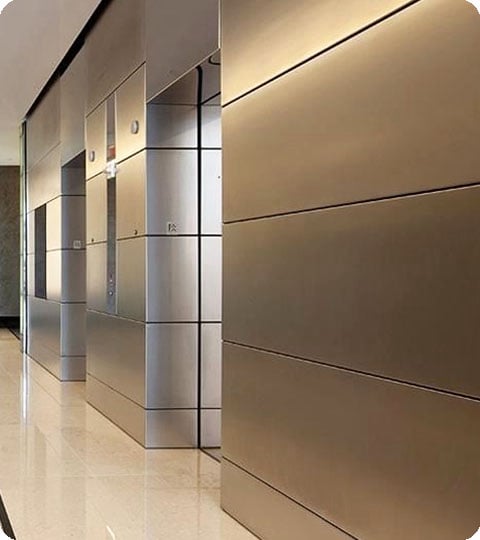
Steel Cladding Installations
Steel cladding installations are a critical stage in delivering hygienic, durable, and professional wall systems for commercial and industrial environments. Even the highest-quality stainless steel or steel cladding materials will fail to perform as intended if they are not installed correctly. In sectors such as commercial kitchens, food processing facilities, healthcare settings, laboratories, and industrial interiors, proper installation is essential for hygiene compliance, long-term durability, and overall safety.
At a basic level, steel cladding installation involves fixing steel sheets or panels to internal wall surfaces to create a protective, easy-clean finish. However, in practice, successful installations require careful planning, accurate measurement, suitable fixing methods, and attention to detailing. Each stage of the process affects how the cladding system performs over time.
The first consideration in steel cladding installations is substrate preparation. Steel cladding must be installed onto walls that are clean, dry, flat, and structurally sound. Uneven or unstable substrates can cause panels to sit poorly, leading to visible distortion, weak adhesion, or voids behind the sheets. These voids can become moisture traps, undermining hygiene performance. In refurbishment projects, existing wall conditions should be assessed carefully before installation begins, and remedial work carried out where necessary.
Accurate measurement and planning are essential. Steel cladding sheets are often cut to size prior to installation to reduce on-site work and achieve a cleaner finish. This requires precise measurement of wall dimensions, including allowances for sockets, switches, pipework, and equipment penetrations. Poor planning can result in excessive on-site cutting, wasted material, and compromised appearance. A professional approach to measurement helps ensure efficient installation and high-quality results.
Fixing methods play a major role in steel cladding installations. Sheets may be fixed using specialist adhesives, mechanical fixings, or a combination of both. Adhesive fixing is commonly used where a flush, seamless appearance is required, particularly in hygiene-critical environments. Mechanical fixings may be used where additional security is needed or where substrate conditions demand it. Selecting the appropriate fixing method depends on the environment, substrate, and performance requirements.
Adhesive fixing requires careful application. Adhesives must be compatible with both the steel and the substrate, and applied in a pattern that provides even support while allowing air circulation during curing. Inadequate adhesive coverage can lead to weak bonding or panel movement. Environmental conditions such as temperature and humidity should also be considered, as they can affect curing times and bond strength.
Mechanical fixing requires precise positioning and suitable fixings. Fixings should be corrosion-resistant and appropriate for the substrate type. Care must be taken to ensure fixings are aligned neatly and do not compromise hygiene or appearance. In some installations, fixings are concealed behind trims or profiles to maintain a clean finish.
Detailing is one of the most important aspects of steel cladding installations. Joints, edges, and corners must be finished correctly to prevent moisture ingress and dirt accumulation. Steel cladding profiles — including internal and external corner trims, joint profiles, and end caps — are used to create sealed, easy-clean transitions. In hygiene-critical environments, joints are often sealed with hygienic silicone to maintain a watertight finish.
Particular attention should be paid to junctions between steel cladding and other surfaces, such as floors, ceilings, worktops, and equipment. These areas are common points of failure if not detailed properly. Sealing these junctions helps prevent contamination and supports effective cleaning routines.
Steel cladding installations must also consider movement and expansion. Steel expands and contracts slightly with temperature changes. Installations should allow for this movement without causing buckling, cracking, or joint failure. Proper use of profiles and controlled joint spacing helps accommodate movement while maintaining a neat appearance.
In commercial kitchens and food environments, installations must account for heat exposure. Steel cladding installed behind cooklines, ovens, and fryers must be fixed securely and detailed to withstand elevated temperatures. Using appropriate grades of stainless steel and heat-resistant adhesives is essential in these areas.
Health and safety is another important consideration. Steel sheets can have sharp edges if not handled or finished correctly. Installers must use appropriate protective equipment, and exposed edges should be covered with profiles to reduce injury risk. Safe installation practices protect both installers and future occupants of the space.
Quality control during installation helps ensure long-term performance. Panels should be checked for alignment, secure fixing, and consistent sealing as work progresses. Addressing issues early prevents more serious problems later. In regulated environments, maintaining a consistent standard across the installation supports inspection readiness and compliance.
At StainlessSteelCladding.co.uk, steel cladding installations are viewed as part of a complete system rather than a standalone task. Materials, fixings, profiles, and sealants are specified together to ensure compatibility and performance. This systems-based approach reduces the risk of installation issues and supports durable, hygienic finishes.
From a maintenance perspective, correctly installed steel cladding is easy to care for. Smooth surfaces and sealed joints simplify cleaning routines and reduce long-term upkeep. Poor installation, by contrast, can lead to persistent cleaning challenges and premature deterioration.
In summary, steel cladding installations require careful planning, appropriate fixing methods, and attention to detail to deliver reliable performance. When installed correctly, steel cladding provides hygienic, durable, and professional wall finishes that stand up to the demands of commercial and industrial environments. For businesses investing in steel cladding, working with experienced installers and high-quality materials is essential to achieving long-term value and compliance.