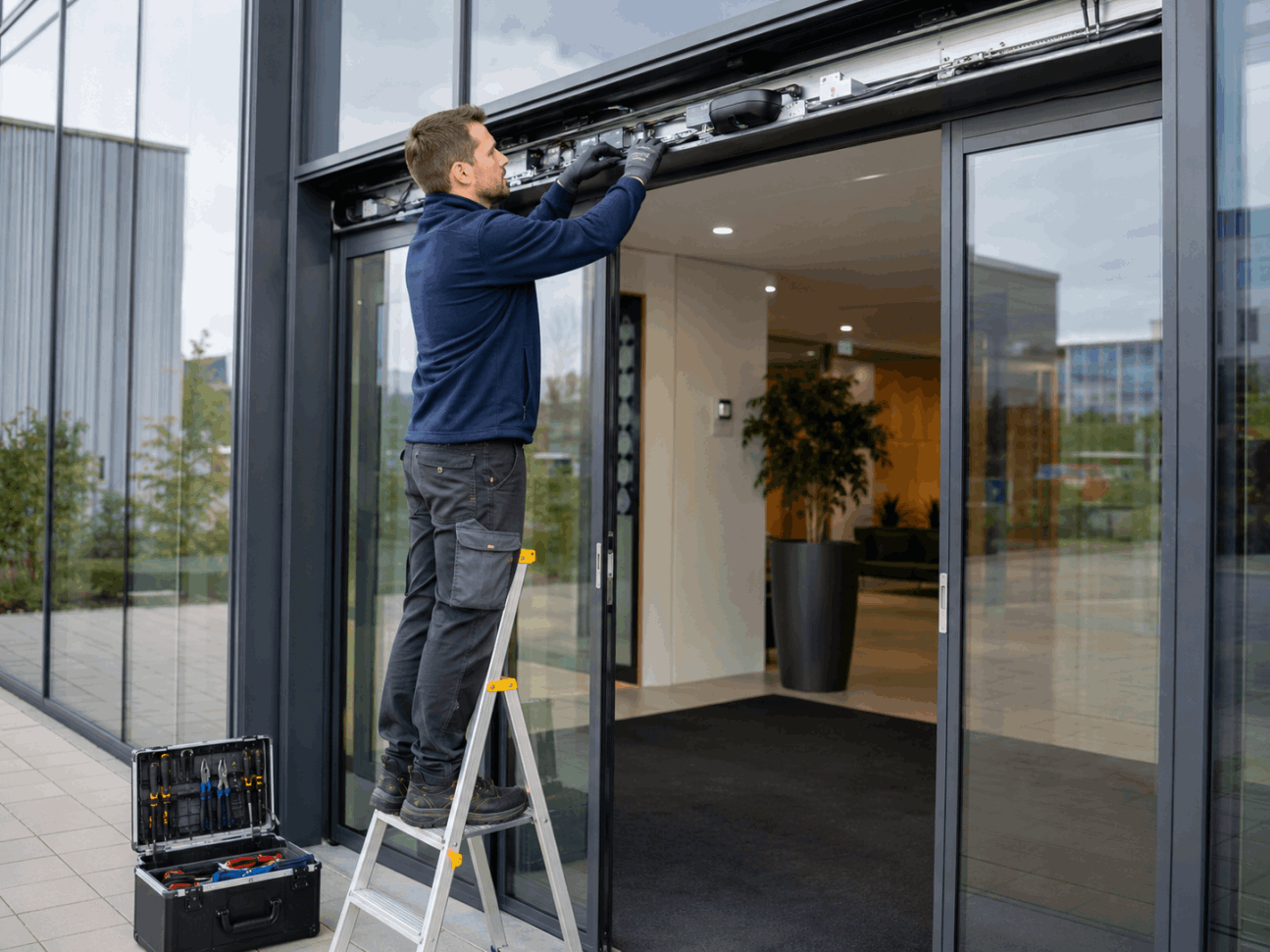
Automatic Door Servicing for Safer and More Dependable Building Entrances
Automatic Door Servicing is an important part of maintaining safe, reliable and efficient access to commercial, residential and public buildings. Automatic doors are used every day in shops, offices, apartment blocks, healthcare buildings, hotels, schools, supermarkets and many other high-traffic locations. They provide convenient access for customers, staff, residents and visitors, but like any mechanical and electrical system, they need regular attention to keep working properly.
A well-serviced automatic door should open smoothly, respond correctly to users and close securely after use. If servicing is ignored, small issues can build up over time. The door may start moving slowly, making noise, sticking, failing to close or responding inconsistently to sensors. These early warning signs can eventually lead to breakdowns, safety concerns or expensive repairs if they are not dealt with promptly.
One of the main reasons Automatic Door Servicing is so important is safety. Automatic doors include moving panels, motors, sensors, controls and safety devices that must operate correctly together. If a sensor fails or the door movement becomes poorly controlled, users could be placed at risk. Regular servicing helps check that the door opens and closes safely, detects people properly and responds as expected during normal use.
Security is another key reason to arrange servicing. An automatic door that does not close fully or lock correctly can leave a building exposed, particularly outside opening hours. This can be a major concern for shops, offices, apartment entrances and commercial sites. Servicing helps identify locking faults, alignment problems and control issues before they compromise the security of the premises.
Reliability is also essential, especially in busy buildings. A faulty entrance can create disruption for customers, staff, residents and deliveries. For a retail store, a door failure may affect trade and first impressions. For an apartment block, it may lead to complaints from residents. For a healthcare or public building, unreliable access can cause inconvenience for people who need safe and easy entry. Planned servicing reduces the risk of sudden failures.
Automatic Door Servicing usually involves a full inspection of the door system. A trained technician may check activation sensors, safety sensors, door movement, motors, tracks, rollers, hinges, guide systems, control units, locks, fixings and emergency release functions. They may also clean key components, make adjustments, lubricate moving parts and recommend replacement of worn items where needed.
Different types of automatic doors may need different servicing checks. Sliding doors, swing doors, folding doors and powered entrance systems each have their own components and common fault points. A professional engineer will understand how to inspect the specific type of door and make sure the system is operating safely and efficiently.
Regular servicing can also help extend the lifespan of the automatic door system. Motors, rollers, tracks and controls are placed under regular strain, especially in high-use entrances. When parts are cleaned, adjusted and maintained, they are less likely to fail prematurely. Replacing a worn component early can also prevent damage to other parts of the system.
For businesses, Automatic Door Servicing can help maintain a professional image. The entrance is often one of the first things customers see. A door that opens smoothly gives a better impression than one that judders, sticks or makes loud noises. A reliable automatic door helps the building feel well cared for and easy to access.
Accessibility is another important consideration. Automatic doors support wheelchair users, elderly visitors, parents with prams and people carrying bags or equipment. If the door becomes unreliable, access may become difficult for some users. Regular servicing helps keep the entrance accessible and welcoming for everyone.
Property managers and landlords can benefit from arranging scheduled servicing rather than waiting for faults. In shared buildings, apartment blocks and managed commercial premises, automatic doors may be used constantly throughout the day. A planned servicing schedule can help reduce emergency callouts, improve tenant satisfaction and provide better control over maintenance costs.
Commercial premises with high footfall may need more frequent servicing than quieter buildings. The right schedule will depend on how often the door is used, the type of system, the building environment and any previous repair history. A servicing provider can advise on a suitable maintenance plan based on the door’s usage and condition.
A good servicing provider should offer clear communication and practical advice. After inspecting the door, they should explain any issues found, whether repairs are needed and what can be done to keep the system working reliably. This helps building owners and managers make informed decisions rather than waiting until a breakdown occurs.
In summary, Automatic Door Servicing is a practical way to protect safety, security, accessibility and daily reliability. Regular maintenance helps identify problems early, reduce disruption, extend system life and keep entrances working smoothly. Whether the door is used in a shop, office, apartment block or public building, planned servicing helps ensure automatic doors remain dependable for everyone who uses them.