Rock Pool Experience: A Hands-On Way to Explore Marine Life and Coastal Habitats
The coastline is full of habitats that can be easy to overlook. Between areas of sand, shingle and exposed rock, small pools of seawater remain behind as the tide falls. These rock pools can contain a surprising variety of life, offering a close-up view of species that are otherwise hidden beneath the surface of the sea.
A rock pool experience gives children, families and educational groups the opportunity to discover this wildlife in a practical and memorable way. Rather than simply learning about marine ecosystems from books or screens, participants can observe living organisms, compare habitats and begin to understand how tides shape the shoreline. The experience can be informal and exploratory or more structured with guidance from someone familiar with local marine life.
One of the most interesting things about rock pools is how much can be found in a very small area. A shallow pool that initially appears empty may contain tiny fish, shrimp, anemones, snails, crabs and numerous other organisms once it is examined carefully. Many species rely on camouflage, remaining motionless or blending closely with the surrounding rock and seaweed.
This makes observation an important part of the experience. Children can learn that wildlife is not always obvious and that looking carefully often reveals far more than rushing from one pool to another. Even the underside of a rock or a patch of seaweed can support small organisms that would otherwise go unnoticed.
Rock pools also introduce the concept of changing environments. The conditions within a pool can alter significantly between high and low tide. When the sea retreats, the remaining water may become warmer, more concentrated with salt or more exposed to sunlight. When the tide returns, the same pool is once again connected to the wider marine environment.
These changing conditions make rock pools useful for learning about adaptation. Different species survive in different ways. Some cling tightly to rocks, others hide in crevices and some move between pools as conditions change. Limpets, for example, remain attached firmly to surfaces, while crabs may retreat beneath rocks or seaweed when disturbed.
Discovering Species and Understanding Habitats
A well-planned rock pool experience can introduce a wide range of marine species without requiring specialist equipment. Crabs are often among the most popular discoveries because their movement and behaviour are easy to observe. Small shore crabs, hermit crabs and other species may all be present depending on the location.
Sea anemones provide another fascinating example. Their soft appearance and tentacles can make them look almost plant-like, but they are animals. When the tide falls, anemones may contract and appear completely different from how they look when submerged.
Marine snails are also commonly found. Periwinkles, limpets and other molluscs can often be seen on rocks and within pools. These species provide a useful introduction to how animals move, feed and protect themselves in exposed coastal environments.
Small fish may remain trapped in deeper pools until the tide returns. Their size, colouration and speed can make them challenging to spot, which adds to the sense of discovery.
Seaweed is an important part of the habitat too. It provides food, shelter and protection from sunlight for many organisms. Different types of seaweed can also indicate how conditions vary between parts of the shoreline.
The shape and depth of individual pools affect what lives there. A shallow exposed pool may support different species from a deeper pool that remains cooler and more stable. This makes it possible to compare habitats only a few metres apart.
Tides themselves can become part of the learning. Participants can observe how the sea gradually reveals sections of the shore and consider what happens to animals when the water level changes. This introduces the idea of the intertidal zone and helps explain why certain species are found in particular areas.
For schools and educational groups, the experience can support topics such as food chains, adaptation, classification and ecosystems. Pupils can record species, sketch animals, compare different pools or discuss how human activity might affect marine environments.
For families, the same activity can be much less formal. Children can simply enjoy searching for animals while gradually becoming more confident identifying what they find.
Responsible Exploration and Marine Conservation
Enjoying rock pools responsibly is essential. These habitats can look resilient, but individual animals and plants can be easily disturbed or damaged.
Where possible, wildlife should be observed in place rather than repeatedly picked up. Handling should only happen when it is appropriate and should be gentle and brief.
Rocks should be replaced carefully if they are turned over. The underside of a rock can provide a cool, damp habitat, so leaving it upside down can expose the animals underneath to heat and dryness.
Animals should also be returned to the exact area where they were found. Moving them to a different pool can place them in unsuitable conditions or expose them to predators.
Containers can be useful for short periods of observation, but they should not become overcrowded. Water in a small container can heat up quickly, particularly in direct sunlight, so animals should be returned promptly.
Participants should avoid collecting live animals or removing them from the shore. Even empty-looking shells can later become useful shelter for hermit crabs or other organisms.
Safety is another key consideration. Rock surfaces can be extremely slippery, especially when covered with seaweed. Suitable footwear can make exploration much safer, while children should remain closely supervised around deeper pools and uneven ground.
Tide times need careful planning as well. An incoming tide can change conditions quickly and may cut off access to some areas. Exploring unfamiliar shorelines without checking local conditions can create unnecessary risk.
Rock pooling also provides an opportunity to discuss litter and marine pollution. Plastic fragments, fishing line and other waste can become trapped along the shore. Seeing this material within a natural habitat can make the effects of pollution more immediate and easier to understand.
Where it is safe to do so, visitors can learn about responsible litter removal and the importance of keeping coastal environments clean.
The experience can also lead into broader discussions about biodiversity. A single pool may contain predators, grazers, filter feeders and scavengers living within a very small area. These different organisms form part of a wider ecological network.
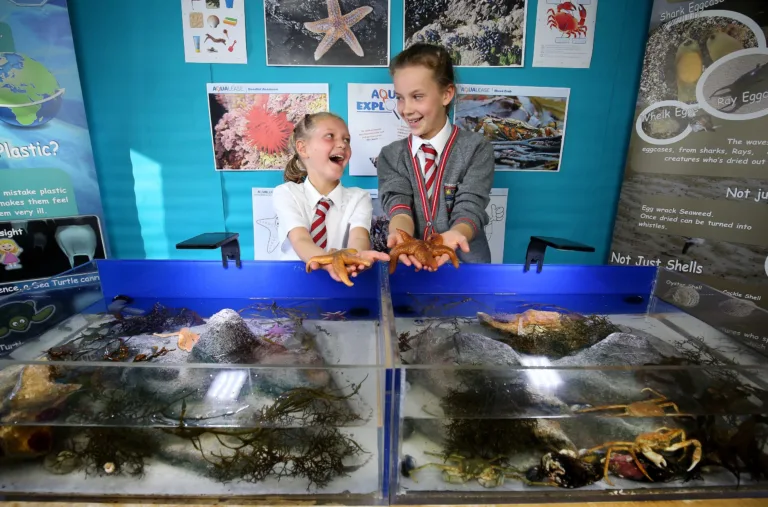
Managed or indoor marine environments can provide a similar learning experience where direct access to the coast is limited. These settings can allow visitors to observe rock-pool species closely while receiving guidance on animal behaviour and habitat requirements.
They can be especially useful for younger children or groups that benefit from a more controlled environment.
The greatest value of rock pooling is often its simplicity. Very little specialist equipment is required, yet the learning opportunities are extensive. A magnifying lens, identification guide or simple observation sheet can add structure without taking away from the sense of exploration.
Ultimately, a rock pool experience offers a practical and engaging way to discover marine wildlife while learning about tides, habitats, adaptation and conservation. By exploring carefully and treating the environment with respect, children and adults can gain a much deeper appreciation of the life found along the shoreline and the importance of protecting these fragile coastal ecosystems.